

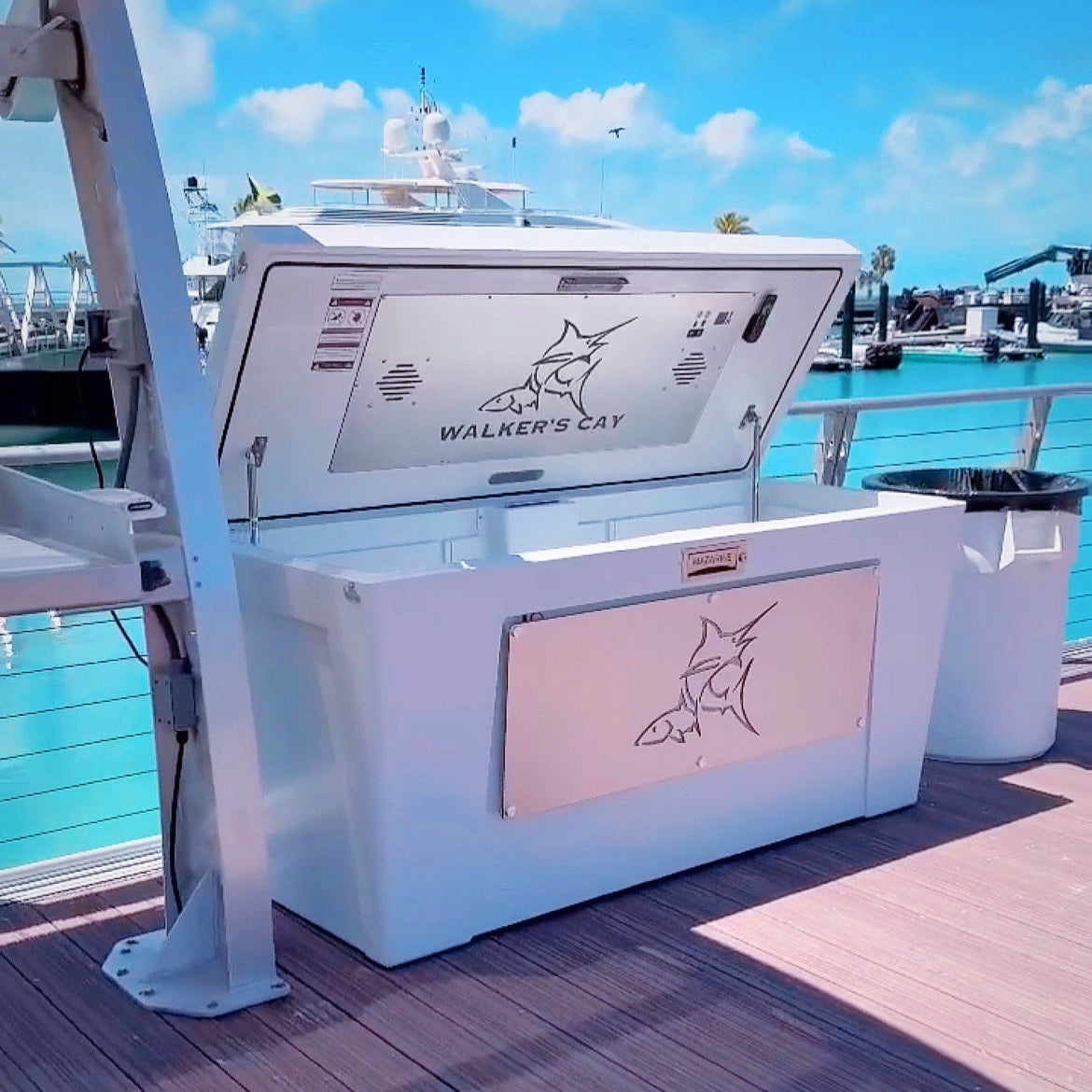
Dock boxes get moldy because moisture enters with wet gear and then remains trapped in a warm, poorly ventilated compartment. Cleaning helps, but lasting control requires reducing moisture and improving air movement.
KEY TAKEAWAYS
- Mold needs moisture, time and a suitable surface.
- Wet towels and life jackets can raise humidity inside a closed box.
- Ventilation and dehumidification solve different parts of the problem.
The short answer: moisture gets trapped
Mold is not caused by the dock box material alone. It becomes a risk when wet towels, life jackets or lines bring moisture into a closed space and the space stays warm and damp for long enough. Cleaning removes existing growth; controlling moisture is what helps prevent its return.
What makes mold return after cleaning?
Cleaning removes visible growth but does not remove the moisture source. If wet gear continues to enter a closed box and the interior remains humid, mold can return. Prevention therefore begins with drying habits, airflow and a storage design that addresses humidity.
Is ventilation enough for a dock box?
Sometimes, but not always. Outside air may already be humid, and passive vents cannot guarantee that moisture leaves the compartment. Ventilation is useful when it creates meaningful air exchange; active dehumidification is a more direct response to persistent interior humidity.
A practical mold-prevention checklist
Inspect seals and hardware, remove standing water, avoid leaving saturated gear packed tightly, clean surfaces promptly and monitor the conditions inside the box. If the same dampness keeps returning, reconsider the storage system rather than repeating the same cleaning cycle.